BACKGROUND: Currently, in Russia, which is a region with mild iodine deficiency (median urinary iodine concentration (mUIC) is <100 μg/l), there is no federal law on universal salt iodization and the voluntary nature of mass iodine prophylaxis has been established.
AIM: to assess the iodine status and the effectiveness of iodine deficiency prevention in adolescents aged 13–18 in Novosibirsk.
MATERIALS AND METHODS. The study included a representative sample of schoolchildren aged 13–18 years (637 people of both sexes, of whom 189 people filled out a questionnaire on the use of iodized salt, 154 of them had urine samples taken to determine the IOM). It was conducted among adolescents aged 13-18 years in Novosibirsk. Questionnaire, determination of IOM, comparison of the obtained data with the results of clinical and population studies conducted in Novosibirsk in 2009-2010, 2019.
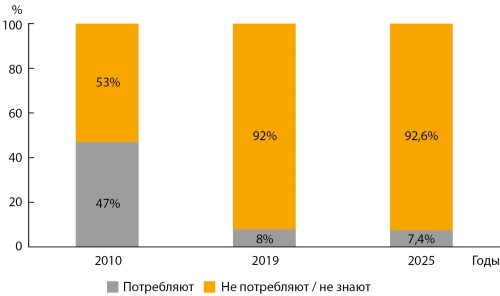
RESULTS: According to the survey conducted in 2025, 7.4% of schoolchildren aged 13–18 years definitely know that they consume iodized salt. The MIC was 166 μg/l, the proportion of urine samples with MIC less than 50 μg/l was 5.2%. In 2010, 47% of the surveyed adolescents consumed iodized salt, the MIC was 93 μg/l, and MIC less than 50 μg/l was determined in 7% of samples. In 2019, 8% confirmed their consumption of iodized salt, the MIC was 123 μg/l, and MIC less than 50 μg/l was 14.5%.
CONCLUSIONS: Over a 15-year observation period, a significant improvement in iodine status of the adolescent population has been noted in Novosibirsk. Low awareness of iodine deficiency and measures to prevent it among the younger generation of Novosibirsk residents has been recorded.